
Digital Transformation for Life Science Manufacturers: Where to Start
Where digital transformation creates value for pharma and life science manufacturers, from paperless operations and data integrity to supply and launch readiness, and how to start. Ideas from a Meet the Boss roundtable with Rockwell Automation.

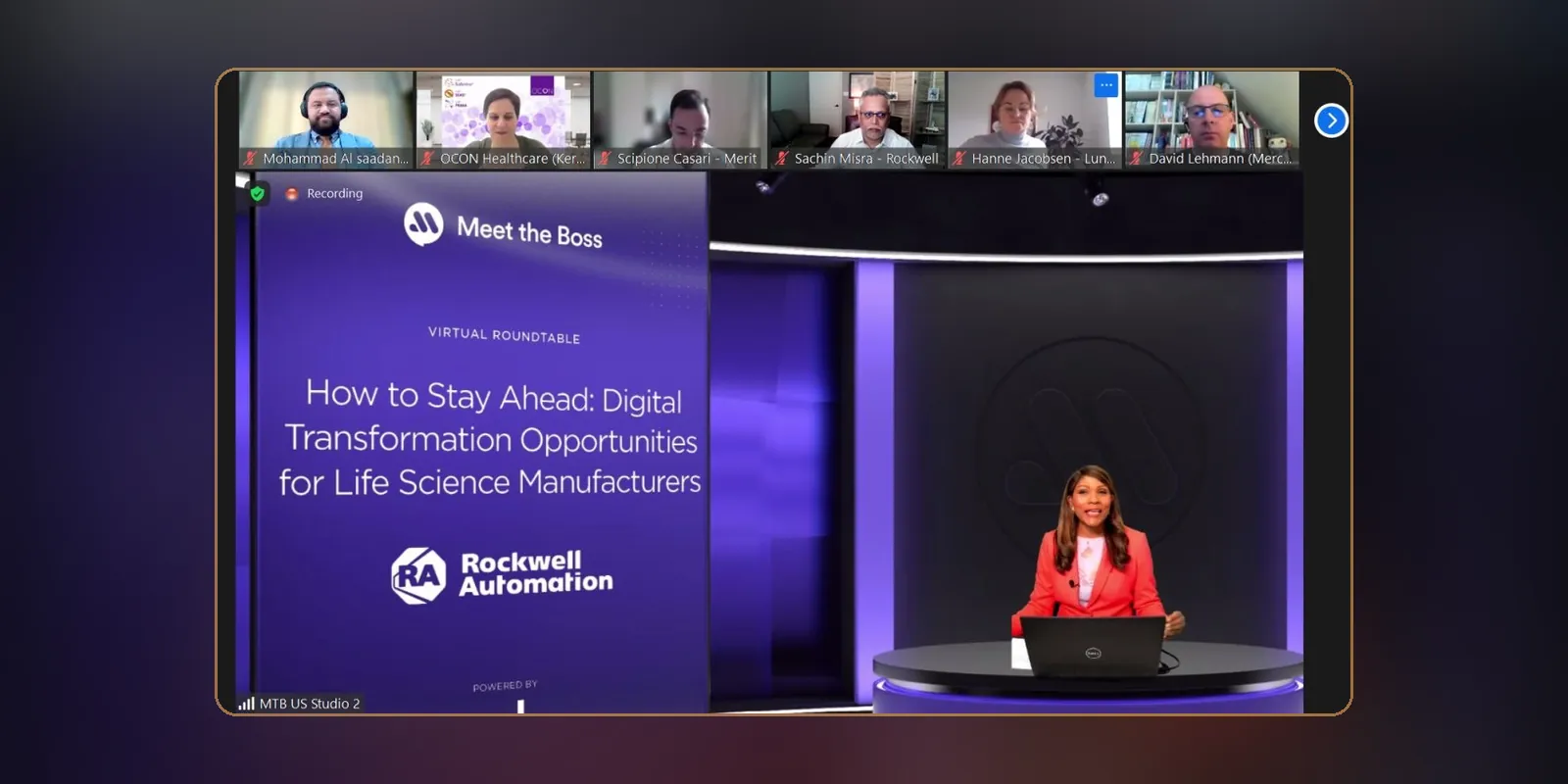
I was selected for a Meet the Boss global virtual roundtable with Rockwell Automation, How to Stay Ahead: Digital Transformation Opportunities for Life Science Manufacturers, alongside leaders from across the life sciences industry. I bring the perspective of someone who has led digital transformation for international markets at LIPTIS Pharmaceuticals and worked on biologic launches at Johnson & Johnson: transformation only pays off when it connects the factory to the market.
Life science manufacturers face a demanding mix of strict quality rules, complex supply chains, pressure on cost, and patients who depend on every batch. Digital transformation helps with all four, when it starts in the right place.
Where digital creates value
1. Connected, paperless operations
Electronic batch records and manufacturing execution systems reduce manual entry, speed up batch review and make deviations visible sooner. Fewer transcription errors means fewer investigations, and faster release.
2. Data integrity by design
Regulators expect records to be attributable, legible, contemporaneous, original and accurate, and also complete, consistent, enduring and available, a set of principles often summarized as ALCOA+. Digital systems with audit trails and access controls make this easier than paper, provided they are validated and governed properly, in line with rules such as 21 CFR Part 11 in the United States and EU GMP Annex 11 in Europe.
3. Predictive maintenance and quality
Sensor data and analytics can flag equipment problems before they cause downtime, and spot process drift before it becomes a deviation. The result is more reliable supply and fewer surprises during inspections.
4. Supply chain visibility
Connecting demand, inventory and production data helps prevent shortages, reduce waste from expiry and plan launches with confidence. Serialization and track-and-trace rules, such as Saudi Arabia's drug track-and-trace system, add another reason to connect these systems.
5. AI, with validation
AI can support demand forecasting, document review, deviation trend analysis and production scheduling. In GxP processes it needs a clearly defined intended use, validation proportionate to the risk, and human oversight. Start with use cases that support people's decisions before automating decisions themselves.
6. Commercial and launch readiness
Manufacturing and commercial teams often plan separately. Shared forecasts and launch dashboards connect supply to market demand, so a successful launch is never limited by product availability. I cover the commercial side in how to launch a pharmaceutical product.
Where to start
- Pick business problems, not technologies: batch review time, unplanned downtime, deviations, stock-outs.
- Assess your data and systems: what is captured, where, and how reliably.
- Run a focused pilot on one line, site or product, with clear success measures.
- Validate and document from day one, with quality, IT and operations involved early.
- Scale what works, with a roadmap across sites and functions.
People make it work
Operators, quality teams and engineers need training, and a voice in designing the new ways of working. Digital skills are now part of manufacturing excellence, as I discuss in building an AI-ready workforce.
Security is part of the design
Connecting factory systems to IT networks and the cloud creates value, and new risks. Cybersecurity for operational technology has to be designed in from the start, not added after an incident.
A checklist for leadership
- Do we know which three operational problems digital should solve first?
- Is our data reliable enough to act on, and do we know who owns it?
- Are quality and regulatory teams part of the program from day one?
- Do our pilots have owners, budgets and success measures?
- Are manufacturing and commercial plans connected?
If you are planning digital transformation, a launch or market entry in the Gulf, see how I support healthcare and pharma companies and Middle East market entry.