Pharma Medical Education in the GCC: Lessons from Rheumatology
What makes medical education change clinical practice in the Gulf, from regional congresses and specialist forums to GP education and local guidelines. Lessons from my immunology years at Janssen, working with rheumatologists across the GCC, with a program design framework, a measurement model and a planning checklist.

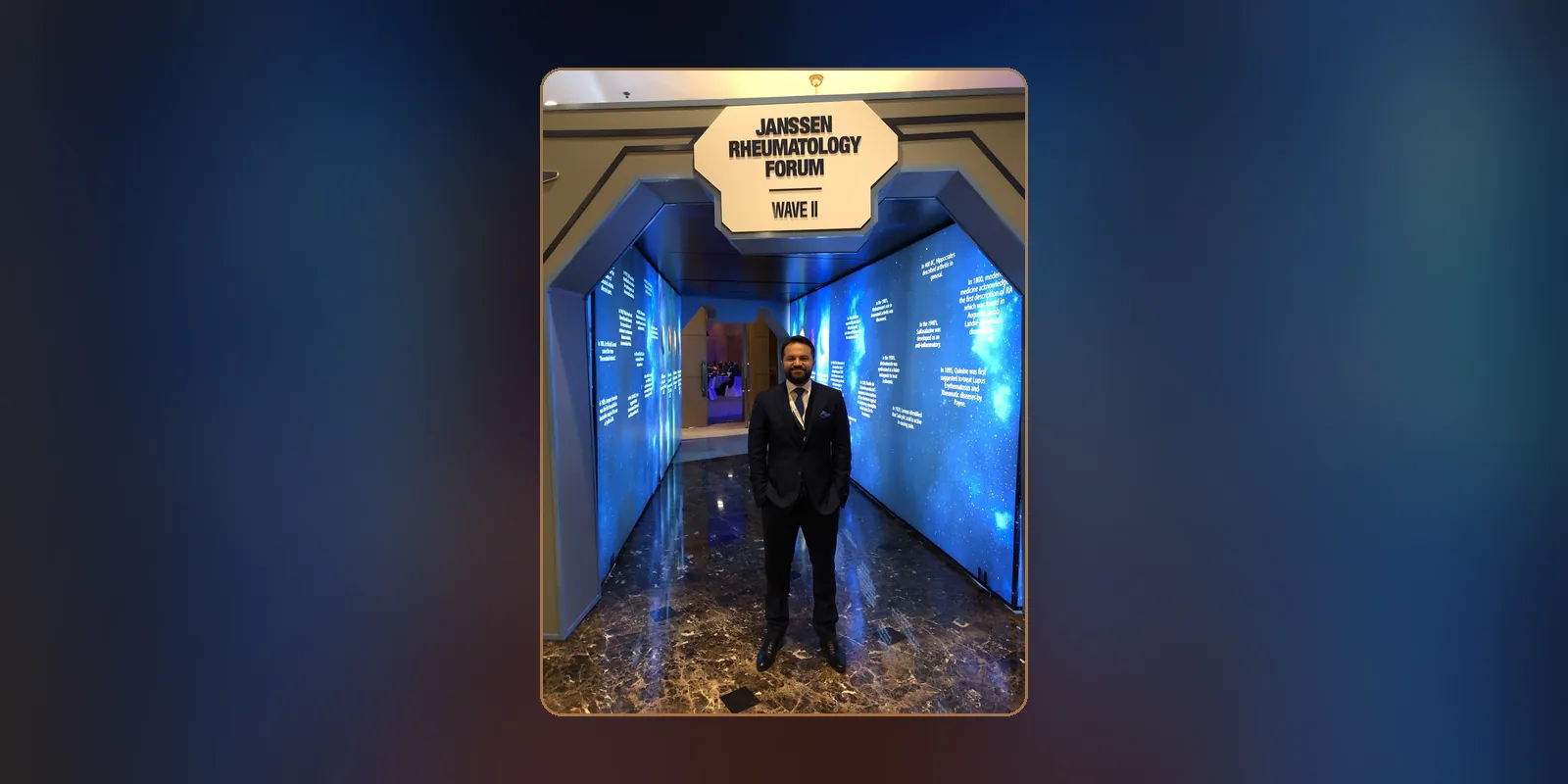
In my immunology years at Janssen, as EMEA Emerging Markets Product Manager for biologics, I learned where specialty brands are really built: in medical education. I was at the first GCC Rheumatology Conference in Kuwait, at the Janssen Rheumatology Forum and at the Kuwait SpA management guidelines meeting, and I was honoured on stage at the first Rheumatology in General Practice conference in Kuwait in 2018. These are the lessons I take into every healthcare launch, in pharma and beyond.
Why medical education matters most for specialty medicines
Biologics and other specialty medicines are prescribed by a small number of specialists, for complex conditions, often after a long road to diagnosis. Patients only reach those specialists if someone recognizes the disease early. Advertising cannot do that work. Education can: it helps specialists apply the latest evidence, and it helps general practitioners recognize, refer and co-manage patients.
In the Gulf this matters twice over. Prescription medicines may not be promoted to the public, so the path to the patient runs entirely through clinicians. And the region's specialists are a small, well-connected community spread across several countries, so a program that works in Kuwait is noticed in Riyadh and Dubai within weeks, for better or worse.
1. Start from a real gap in practice
The best programs start with a question doctors actually have. In rheumatology, one example is diagnostic delay. Axial spondyloarthritis is often diagnosed years after symptoms start, because chronic back pain is common and inflammatory back pain is easy to miss. A gap like that tells you who to educate (general practitioners), what to say (recognize and refer) and what to measure (earlier referrals).
Finding the gap is research, not guesswork. Three sources work well in the Gulf:
- Specialist interviews with ten to fifteen clinicians across the markets you serve, asking where patients arrive late, where guidelines are not followed and why, and what they wish referrers knew.
- Chart or registry insight, where it exists and can be used appropriately, on time to diagnosis and referral patterns.
- Advisory boards, run as working sessions on a defined problem rather than as presentations, with the output being a prioritised list of educational needs.
Write the gap as a sentence that names the clinician, the behaviour and the patient: "General practitioners in primary care centres do not recognise inflammatory back pain in adults under 45, so patients reach rheumatology years late." Every format choice follows from it.
2. Give each format a job
- Regional congresses share evidence and local experience across countries. The first GCC Rheumatology Conference, organized by the Kuwait Association of Rheumatology in 2019, was built around exactly that idea: "Sharing our local experience".
- Specialist forums keep a group of experts learning together over time. Running a forum in waves, as the Janssen Rheumatology Forum did, lets each wave build on the last.
- GP education brings specialty knowledge to the doctors who see patients first. Rheumatology in General Practice, first held in Kuwait in 2018, brings general practitioners and rheumatologists together.
- Guidelines meetings, like the Kuwait SpA management guidelines meeting, bring local experts together on how patients should be managed in their own health system.
- Internal training gives every market the same story. At an Emerging Markets Immunology Team meeting, I presented the new Simponi campaign to marketing managers and directors from EMEA emerging markets, so each country could adapt one core story to local practice.
A useful way to plan a year is a simple matrix: the audiences down the side (specialists, referrers, allied professionals, internal teams), the formats across the top, and in each cell the one job that format does for that audience, or nothing. Empty cells are fine. A program with every cell filled is a calendar, not a strategy.
3. Make it credible
- Accredit it. CME/CPD accreditation signals quality and gives doctors credit for their time. Both rheumatology conferences above carried CME credits; Rheumatology in General Practice, for example, was registered with the Kuwait Institute for Medical Specialization (KIMS). Each Gulf country has its own accreditation body and its own requirements for hours, content review and sponsorship disclosure. Plan the accreditation timeline into the program, because it is rarely quick.
- Let experts lead the science. Independent experts should develop and present the content, and sponsorship should be disclosed. The company's role is to fund, organise and ensure quality, not to write the slides.
- Follow the codes. The IFPMA Code of Practice and local regulations set clear rules for how companies support medical education, from hospitality to speaker fees. Involve medical and compliance colleagues from the first plan, not just at final approval. Government-employed clinicians in several Gulf countries need institutional approval to speak or attend, and fair-market-value contracts for faculty should be in place before the invitation goes out.
4. Choose and develop faculty deliberately
Medical education in a small specialist community depends on the credibility of the people on stage. Map the faculty landscape across the Gulf: who publishes, who teaches, who sits on guideline committees, who the next generation of specialists listens to. Then build a faculty plan that balances established key opinion leaders with rising clinicians, and that spreads participation across countries so no single market feels overlooked.
Invest in faculty as educators, not only as speakers: training in adult learning, case-based teaching and chairing discussions raises the quality of every program they touch. The forum model, with the same group returning in waves, is the best structure I know for this, because faculty and audience grow together.
5. Measure change, not attendance
Attendance and satisfaction scores are a start, not the goal. Better measures include:
- Knowledge and confidence before and after the program
- Commitment to change, captured at the end of the session, and a follow-up on whether it happened
- The questions doctors ask afterwards, and the follow-up they request
- Referral patterns, where they can be measured appropriately
- How local guidelines and pathways evolve
Agree the measures before the program starts, and review them with medical colleagues. A simple model works: level one is reaction (satisfaction), level two is learning (knowledge and confidence), level three is behaviour (commitment and reported practice change), level four is results (referrals, time to diagnosis, guideline adoption). Most programs stop at level one. Specialty brands are built at levels three and four.
6. Extend it digitally
A congress lasts two days; learning needs to last all year. Webinars, on-demand recordings, case discussions and HCP portals in Arabic and English keep the conversation going between meetings. The digital layer also solves a Gulf-specific problem: clinicians spread across six countries cannot travel to every meeting, and a recorded forum session with a live case discussion a month later reaches the ones who could not.
Design the digital extension as part of the program, not as a recording of it: a pre-meeting survey that shapes the agenda, a post-meeting summary with the key slides, a case series over the following quarter, and a path for questions to reach the faculty. Within the omnichannel plan, medical education content becomes the most valued modules in the library. I cover the digital side in digital marketing in pharma and healthcare and the orchestration in pharma omnichannel marketing. The plan those channels serve is the pharma digital marketing strategy.
7. Mistakes that waste medical education budgets
- Starting with a venue and a date. The program is designed backwards from a hotel booking rather than forwards from a gap in practice.
- Product-shaped education. Content that happens to lead to the brand loses the audience and the accreditation body.
- One-off events. A single symposium changes nothing; a sequence changes practice.
- Faculty chosen by seniority alone. The most senior professor is not always the best teacher, and rising clinicians are the audience's peers.
- Measuring the room, not the clinic. Attendance counts tell you about logistics, not about patients.
- Compliance at the end. A program redesigned after the compliance review loses months and credibility.
A checklist for your next program
- Does it start from a real gap in practice, written as a sentence that names the clinician, the behaviour and the patient?
- Does each format have a clear job and audience, with empty cells where a format adds nothing?
- Is it accredited, expert-led and compliant, with faculty contracts and institutional approvals in place?
- Is the faculty plan balanced across countries and generations?
- Do we know which change we will measure, at which level, and when?
- Will the learning continue after the event, through a designed digital extension?
Planning a launch or a medical education program in the Gulf? See the pharma product launch checklist, how I work as a pharma marketing consultant on launches and medical education, and how I support healthcare and pharma companies as a marketing head. When the company is not hiring a full-time lead, a fractional CMO for pharma and healthcare can hold the program.