Pharmaceutical Digital Marketing in the Middle East: A CEO's Guide
Eight digital marketing trends and best practices for pharmaceutical leaders in the Middle East, from compliance-first campaigns to omnichannel HCP engagement, with the country differences, the operating model and the measures that show it is working.

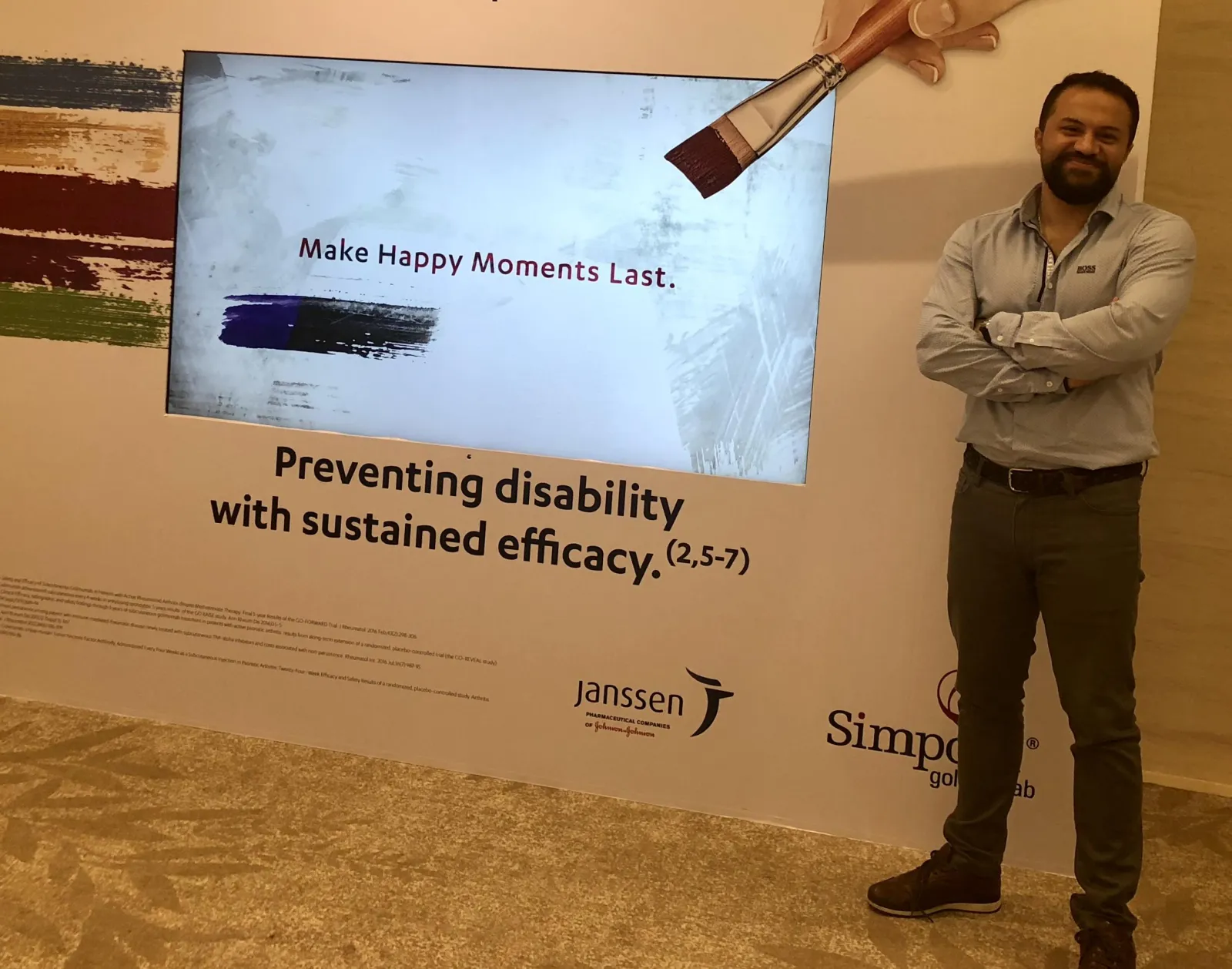
Digital is now the main stage for pharmaceutical brands in the Middle East. These are the trends and best practices that set the leaders apart, drawn from my years in pharma marketing at Pfizer, AbbVie and Johnson & Johnson across Kuwait, Saudi Arabia and the UAE, and from the launches and market-entry work I have led since.
This article stays on the Middle East: channels, languages and compliance for pharmaceutical brands in the region. The general method is in digital marketing in pharma and healthcare.
What is different about the region
Three facts shape every pharma digital plan in the Middle East. Prescription medicines may not be promoted to the public, so digital is an HCP channel first and a disease-awareness channel second. The region is several markets with their own regulators, languages and health systems, not one; Saudi Arabia, the UAE, Egypt, Kuwait and Qatar each need their own plan on a shared platform. And messaging apps, above all WhatsApp, are a primary professional channel in a way they are not in the United States or most of Europe, which changes how consent, content and field follow-up are designed.
1. Regulatory-first digital campaigns
With tightening regulations from regional authorities, pharma brands are prioritizing compliance in all digital communications. CEOs should ensure:
- Localized content approval workflows that meet Ministry of Health and drug authority guidelines in each country, with the SFDA in Saudi Arabia, the UAE health authorities and the Egyptian Drug Authority each having their own requirements
- Transparent product information and clear disclaimers on all platforms
- Consent-driven data capture for patient and professional engagement, aligned with the personal data protection laws now in force in Saudi Arabia, the UAE and Egypt
- A verification layer that keeps promotional content for HCPs behind a login, and public content product-free
The fastest teams approve content once, as reusable modules, and let channels assemble from the approved library. The slowest approve every campaign from scratch.
2. Omnichannel engagement for HCPs and patients
Healthcare professionals (HCPs) and patients expect seamless, multi-platform interactions. Leading pharmaceutical companies are:
- Integrating email, WhatsApp, webinars and in-person visits into one journey per HCP, with the field force able to see digital engagement before a call and send approved content after it
- Launching educational portals for HCPs in Arabic and English, with on-demand references and recorded symposia
- Using secure, interactive platforms for patient support and adherence programs, where regulations allow
Omnichannel in the region depends on one customer record per HCP across all countries, with consent and channel preferences recorded. Without it, the channels stay separate and the HCP receives noise. I set out the full operating model in pharma omnichannel marketing.
3. Data-driven personalization
AI-driven analytics are changing how brands interact with their audiences. Top performers are leveraging:
- Segmented email and messaging campaigns based on specialty, patient volume and current behaviour, not only on title
- Personalized educational content for patients and caregivers in disease awareness programs
- Real-time engagement tracking to refine outreach, and simple next-best-action rules that decide what each HCP sees next
AI's job here is deciding, logging and timing, not writing promotional claims. Every content module still goes through medical and regulatory review.
4. Influencer-led medical awareness
Trusted local physicians and key opinion leaders (KOLs) have become essential in reaching both HCPs and the public. Best practices include:
- Partnering with respected regional physicians for live webinars and case discussions, contracted at fair market value with disclosed sponsorship
- Sharing collaborative content with pharmacists and community leaders for disease awareness
- Highlighting authentic patient journeys, with full consent and within the rules on public communication
For specialty brands, the deeper version of this is accredited medical education: congresses, specialist forums, GP education and guideline meetings. I describe what works in pharma medical education in the GCC.
5. Multilingual, culturally aligned content
The Middle East is diverse, with significant Arabic-, English- and Urdu-speaking populations, and Arabic itself varies between the Gulf, Egypt and the Levant. CEOs should drive:
- Content localization for each target market, with one core story adapted locally rather than one global campaign translated
- Culturally sensitive visuals and messaging, reviewed by local medical and marketing teams
- Multilingual support across digital touchpoints, including the contact centre and patient support programs
The Simponi campaign I created at Janssen worked across EMEA emerging markets because each country adapted one core story to local practice. Translation alone would have failed.
6. Video and visual storytelling
Short, informative videos and infographics are outperforming traditional text. Pharmaceutical marketers are:
- Producing animated mechanism and dosing explainers for HCPs, and disease explainers for the public where allowed
- Recording symposia and case discussions for on-demand viewing on HCP portals
- Using short-form video on social platforms for disease awareness, with content pre-approved and practitioners correctly identified
7. Advanced SEO and paid media strategies
Standing out online requires both organic and paid approaches. Key tactics include:
- Optimizing brand and disease keywords in Arabic and English, with HCP-facing content behind verification and disease content open to the public
- Running compliant Google and LinkedIn campaigns aimed at verified HCP audiences and at congress follow-up
- Leveraging programmatic display on medical publisher networks for HCP targeting, with frequency caps so reach does not become irritation
8. Privacy, trust and transparency as differentiators
Data privacy is a top concern for patients and professionals, and it is now law. Successful brands emphasize:
- Secure platforms for all digital interactions, hosted in-region where the law requires
- Clear communication on data usage and privacy policies, in Arabic and English
- Consent captured per channel with wording, date and source, especially for WhatsApp
- Transparent reporting on patient outcomes and feedback in support programs
Country notes
- Saudi Arabia. The largest market and the one with the most active digital health agenda under Vision 2030. HCPs are reachable through institutional email, WhatsApp and LinkedIn; regulatory and data protection requirements are among the strictest in the region, with in-Kingdom hosting expected for sensitive data.
- United Arab Emirates. Multiple health authorities (federal, Dubai and Abu Dhabi), a highly international clinician base, English as the working language of medicine, and a federal health data law that restricts transfer of health information abroad.
- Egypt. A large, price-sensitive market with a strong local manufacturing base, Arabic as the primary professional language, the Egyptian Drug Authority as regulator and Law 151 of 2020 on personal data. Digital reach to physicians is high; infrastructure for HCP portals is improving.
- Kuwait, Qatar, Bahrain, Oman. Smaller markets with concentrated specialist communities, where medical education and personal relationships carry disproportionate weight and a regional platform with local adaptation is the efficient model.
The operating model that makes this work
- One regional platform for CRM, content library, consent and analytics, with country configuration for language, rules and channels
- A claims matrix and approved content modules per country, so campaigns recombine approved parts
- A field force equipped to orchestrate, with pre-call visibility of digital engagement and one-click approved follow-up
- Journeys designed per segment, starting with two or three, not twenty
- Measurement by segment and country: reach and engagement, behaviour change from HCP research, and prescriptions or share in target accounts versus comparable accounts, with honest attribution
Measures that matter
| Layer | Examples |
|---|---|
| Activity | Combined reach and frequency per HCP segment and country, content consumed, event attendance |
| Behaviour | Message recall and intent from HCP research, requests for information or samples, journey progression |
| Business | Prescriptions, new patient starts or share in target accounts versus comparable accounts over the agreed period |
Driving pharmaceutical excellence in the Middle East
For CEOs in the Middle Eastern pharmaceutical sector, digital marketing is now a mission-critical function. By embracing these trends and best practices, you can boost brand reputation, foster stronger stakeholder relationships and accelerate sustainable growth in a complex marketplace.
Lead with compliance, innovate with technology, and always put patient trust at the forefront of your digital strategy.
For the method that sits under these regional tactics, read digital marketing in pharma and healthcare and the strategy framework in pharma digital marketing strategy. A launch in the region can use the pharmaceutical product launch checklist. If you want this work led for your brand, see how I work as a pharma marketing consultant, and for a launch into the region, Middle East pharma market entry.