Digital Transformation of Medical Labs in Saudi Arabia, Without Price Wars
How medical laboratories in Saudi Arabia can use digital transformation to compete on value instead of price, in B2C and B2B, from someone who led marketing and business development inside two of the region's largest lab networks.

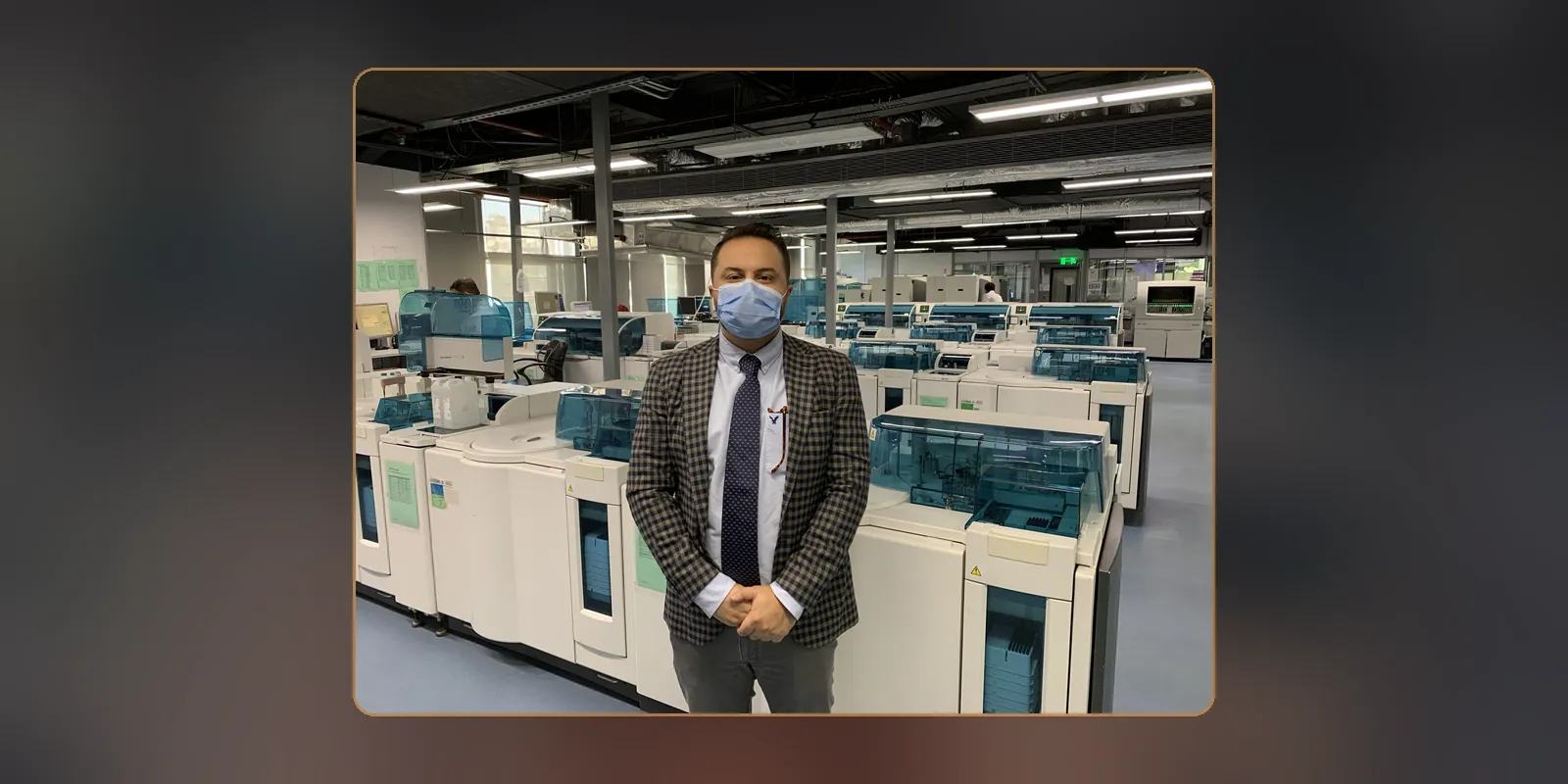
The digital transformation of medical laboratories in Saudi Arabia has moved from being a trend to becoming a must, especially with the rise of personalized care.
I write this from the inside: I was Marketing Director for the GCC at Alborg Diagnostics, a network of more than 700 clinics, and MEA Business Development Lead at IDH Group, two of the region's largest laboratory networks.
With the Kingdom's ambitious Vision 2030, integrating digital technologies into medical labs is essential for boosting efficiency, accuracy and patient care. This transformation is also important for avoiding harmful price wars over medical tests, which erode margins across the whole sector and leave no winner.
Here is an in-depth look at the current trends, the strategies I have seen work and the mistakes to avoid, in both B2C and B2B business.
1. Understanding the digital transition
Saudi Arabia's medical labs are undergoing digital transformation due to several key factors:
Technological progress. The integration of AI, machine learning and IoT in lab operations is enhancing process efficiency, reducing errors and increasing diagnostic precision. Automation in pre-analytics and reporting shortens turnaround, which is the single most visible quality signal to patients and physicians.
Regulatory encouragement. Government initiatives under Vision 2030 are creating a supportive environment for digital healthcare innovation, including national health platforms that patients already use to access results and appointments.
Patient-centric focus. There is increasing demand for personalized medicine. Digital tools make it possible by providing precise and timely data, supported by customer experience, CDP, AI, loyalty and omnichannel integrations. Patients need to be able to reach you easily, book a visit or a lab test, and get their results at the right time. This is where the revenue is actually generated: targeted, customized campaigns running through a fully integrated marketing funnel.
Payer pressure. Insurers and corporate clients want lower cost per test and better data. A lab that can only answer with a discount is in a price war by default. A lab that can answer with turnaround, accuracy, coverage and integration is not.
2. Why price wars start, and how to stay out of them
Price wars in lab services follow a pattern. A test is treated as a commodity because the result looks the same on paper, a new entrant discounts to win volume, incumbents match, and within a year everyone's margins have fallen while patients' trust has not risen at all. The way out is not a better discount; it is making the result not look the same:
Focus on value over price. Highlight the unique advantages your lab offers, such as rapid turnaround times, high accuracy, accreditation, specialist test menus or outstanding customer service, to set your lab apart from others. Publish your turnaround standards and keep them.
Segment the offer. Routine tests, specialised and genetic testing, corporate screening, home collection and wellness panels have different buyers and different price sensitivity. Compete on price only where you choose to, and only with a cost structure that supports it.
Invest in digital training. Give your staff the skills to use new technologies effectively, from the contact center to reception to loyalty. This raises service quality and boosts employee satisfaction and retention.
Collaborate and innovate. Partner with the right technology companies to stay at the forefront of advancements. Innovation should be an ongoing effort, not a one-time initiative.
Engage with customers. Use digital platforms to connect with patients and healthcare providers. Educate them about the benefits of your services, continuously gather feedback for improvement, and use automation to keep educating at scale.

3. The B2C playbook: patients who choose their lab
A growing share of lab visits in the Kingdom is chosen by the patient, for wellness panels, chronic disease monitoring, pre-employment and pre-marital tests, and tests ordered by a doctor but performed wherever the patient prefers. For these, the lab is a consumer brand:
- Be found locally. Accurate listings for every branch, Arabic-first search content for the tests people look for, and a booking link that works from maps.
- Book in two taps. Web, app and WhatsApp booking, with home collection as an option where it is offered.
- Results that reassure. Fast, clear results with plain-language explanations and a path to a clinician's comment. The result page is the most-visited part of your brand.
- Loyalty with a reason. Family accounts, chronic monitoring plans and reminders for repeat tests, built on consent and on a customer data platform that remembers the patient across branches.
- Reviews. Ask every patient, answer every review, and route complaints to service recovery within a day.
4. The B2B playbook: physicians, hospitals, insurers and employers
Most lab volume still comes through B2B relationships, and this is where I spent most of my time at IDH and Alborg. Each account type buys differently:
- Referring physicians and clinics want reliability, turnaround, easy ordering, electronic results into their systems and a person to call. A key-account program with named managers, regular visits and a monthly service report beats any brochure.
- Hospitals outsource specialised tests and sometimes whole laboratories. They buy on accreditation, test menu, logistics, integration and price, through tenders. Know the tender calendar and be in the conversation before the specification is written.
- Insurers want network coverage, cost per test, utilisation data and fraud controls. Bring data to the negotiation, not only rates.
- Employers buy screening programs and wellness days. Package them, deliver them on site or at home, and report outcomes to HR.
Treat B2B as a sales function with a CRM, targets by account and a pipeline review, supported by marketing with account-based content, case studies and webinars for physicians.
5. The digital operating model
Digital transformation in a lab network is not an app. It is a set of connected systems and the habits to use them:
- Laboratory information system integrated with ordering, results delivery and billing
- Customer data platform that joins patients and accounts across branches and channels, with consent and preferences
- Contact centre and messaging (phone, WhatsApp, app) on one queue with service standards
- Marketing automation for reminders, recalls, campaigns and corporate communications
- Dashboards that show volume, revenue and margin by test group, branch and account, alongside turnaround and satisfaction
Start with the customer data platform and the dashboards. Without them, every digital initiative is a pilot nobody can evaluate.
6. Data-driven insights
Labs that invest in digital transformation report gains in operational efficiency, shorter turnaround and lower cost per test, while those engaging in price wars often see a decline in service quality and customer satisfaction. The measures that matter for the commercial side:
- Volume, revenue and contribution margin by test group, branch and account type
- Turnaround time against published standards
- Cost per booked patient by channel, and repeat rate
- Account retention and growth in the B2B book
- Net promoter or satisfaction score, and complaint resolution time
7. Mistakes I have watched labs make
- Discounting first. The fastest way to teach the market that your result is a commodity.
- An app without an operating model. Downloads without booking, results or loyalty behind them.
- B2B run by the lab director in spare time. Key accounts deserve a sales team and a plan.
- Data in five systems. No single view of the patient or the account, so no personalisation and no measurement.
- Marketing that cannot show appointments and accounts by source. If the dashboard stops at followers, the budget is at risk.
8. Key market players
- Al Borg Diagnostics
- Delta Medical Laboratories
- Alfa Medical Laboratories
- Tibyana Medical Laboratories
- Al Farabi Medical Laboratories
- Advanced Cell Laboratory for Medical Analysis Company
- Medlab Medical Labs
- Wareed Medical Laboratories
- High Quality Labs, Medina
For the broader planning method for providers, read healthcare marketing strategy for hospitals and clinics. If you run a laboratory network and want marketing and business development leadership from someone who has done it inside the sector, see the healthcare marketing expert page and the Gulf healthcare marketing leadership chapter with dates.